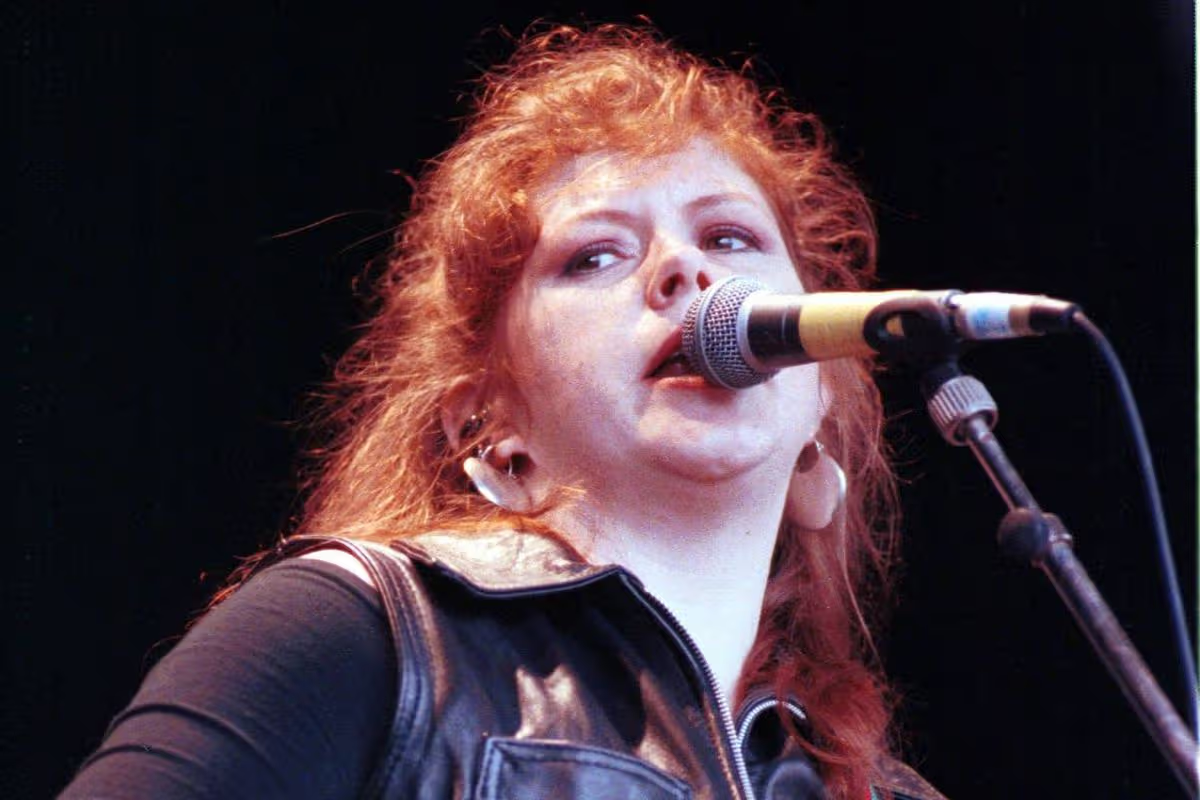

The story of Kirsty MacColl is one filled with remarkable musical talent, emotional depth, and a tragic ending that still resonates with fans around the world. When people search for Kirsty MacColl Death, they are often looking for clarity, truth, and a respectful timeline of what actually happened. Her passing shocked the music industry and left many unanswered questions that continue to be discussed decades later.
What makes the Kirsty MacColl Death so impactful is not just the suddenness of the event, but also the legacy she left behind. She was not only a gifted singer-songwriter but also an artist who shaped British pop music with intelligence and emotion. This article explores her life, career, and the full timeline surrounding the Kirsty MacColl Death, presented in a clear and human way.


Kirsty MacColl Biography
Before diving into the timeline of Kirsty MacColl Death, it’s important to understand who she was as a person and artist.
| Detail | Information |
|---|---|
| Full Name | Kirsty Anna MacColl |
| Date of Birth | October 10, 1959 |
| Age | 41 years (at time of death) |
| Profession | Singer, Songwriter |
| Nationality | British |
| Net Worth (approx.) | Estimated modest estate (not publicly fixed) |
| Notable Works / Achievements | “Fairytale of New York”, “They Don’t Know”, “In These Shoes?” |
Kirsty was known for her sharp songwriting skills and distinctive voice. She often blended pop, folk, and alternative influences, creating a style that felt both timeless and personal.
Early Life and Musical Beginnings
Kirsty MacColl was born in Croydon, London, into a creative household. Her father, Ewan MacColl, was a well-known folk singer and playwright, while her mother, Jean Newlove, was a choreographer. Growing up in such an environment meant music and performance were always part of her life.
From a young age, she showed strong artistic instincts. However, she was determined to create her own identity rather than rely on her father’s reputation. This independence shaped her career and eventually led to her breakthrough in the late 1970s.
While her early career had its ups and downs, she slowly built recognition as a solo artist with a unique voice in British pop music.
Rise to Fame and Career Highlights
Before the Kirsty MacColl Death became a topic of global attention, she had already achieved significant success in the music world.
Some key highlights include:
- Her debut single “They Don’t Know” became a hit after being later covered by Tracey Ullman.
- Her collaboration with The Pogues on “Fairytale of New York” became one of the most iconic Christmas songs ever recorded.
- She released several critically acclaimed albums showcasing her songwriting talent.
- Her music often combined wit, emotional honesty, and social commentary.
Kirsty was respected not only by fans but also by fellow musicians. She had a reputation for being both creative and uncompromising in her artistic vision.
Understanding her career helps frame the emotional weight behind the Kirsty MacColl Death, as she was still actively involved in music at the time of her passing.
Kirsty MacColl Death Timeline Key Facts and Events
The Kirsty MacColl Death remains one of the most discussed tragedies in modern music history. Below is a structured timeline of the key events leading up to and following her passing.
Early December 2000: Arrival in Mexico
Kirsty MacColl traveled to Mexico with her family. The trip was meant to be a peaceful holiday break. She was accompanied by her partner and children, enjoying time away from her busy career.
At this point, there was no indication of the tragedy that would soon unfold. The Kirsty MacColl Death was still an unimaginable outcome.
15 December 2000: The Diving Trip Begins
On this day, Kirsty joined her sons for a scuba diving excursion in Cozumel, Mexico. The waters were known for being popular among tourists and divers.
According to widely reported accounts, she was in a designated diving area when a speedboat entered a restricted zone.
This moment marks the critical point in the Kirsty MacColl Death timeline.
The Fatal Incident
During the dive, a speedboat entered the area illegally. In a split-second moment, Kirsty is believed to have pushed her son out of harm’s way.
She was struck by the boat and suffered fatal injuries.
This tragic accident became the central and most painful part of the Kirsty MacColl Death story. Witness accounts and reports later highlighted safety failures in the area, raising serious concerns about regulation enforcement.
Immediate Aftermath
After the incident, emergency response teams were called, but Kirsty’s injuries were too severe. She died on the scene, leaving her family and fans devastated.
News of the Kirsty MacColl Death spread quickly, shocking both the UK and international music communities.
Fans struggled to process how such a sudden accident could take the life of a beloved artist.
Investigation and Controversy
Following the Kirsty MacColl Death, investigations were launched into the circumstances of the accident.
Key points that emerged included:
- Questions about how a speedboat entered a restricted diving zone
- Concerns over enforcement of maritime safety rules
- Debate over accountability and responsibility
The case sparked ongoing discussions for years, as many felt that clearer answers were needed. The Kirsty MacColl Death thus became not only a personal tragedy but also a public safety concern.
Public Reaction and Tributes
The reaction to the Kirsty MacColl Death was overwhelming. Fans, fellow musicians, and industry figures paid tribute to her talent and legacy.
Some notable responses included:
- Emotional tributes from British musicians who admired her work
- Radio stations playing her songs repeatedly in her honor
- Fans organizing memorial events and online tributes
Her influence became even more apparent after her passing, as people revisited her music with renewed appreciation.
Legacy of Kirsty MacColl
Although the Kirsty MacColl Death marked a heartbreaking end, her legacy continues strongly.
She is remembered for:
- Her storytelling ability in songwriting
- Her emotional and intelligent lyrics
- Her contribution to iconic songs in British pop history
- Her fearless artistic independence
Many modern artists still cite her as an influence. Her music remains relevant, especially during holiday seasons when “Fairytale of New York” continues to be widely played.
The Kirsty MacColl Death did not erase her presence; instead, it highlighted the depth of her contribution to music.
Why the Kirsty MacColl Death Still Matters Today
Even decades later, people continue searching for Kirsty MacColl Death because her story raises important themes:
- The fragility of life
- The importance of safety regulations
- The lasting impact of artistic legacy
- The emotional connection fans build with musicians
Her story is not just about tragedy. It is also about how a creative voice can continue to inspire long after it is gone.
Key Facts Summary
To better understand the Kirsty MacColl Death, here are the key facts:
- She died on 18 December 2000 in Cozumel, Mexico
- The cause was a speedboat accident during a diving trip
- She was 41 years old at the time
- She is survived by her family and remembered globally
- Her music continues to influence new generations
Each of these facts contributes to the broader understanding of the Kirsty MacColl Death timeline.
Conclusion
The Kirsty MacColl Death remains one of the most heartbreaking moments in modern music history. It combined sudden tragedy with the loss of an artist who still had so much to offer creatively. Her life, though cut short, left behind a rich musical legacy that continues to resonate with fans around the world.
When reflecting on the Kirsty MacColl Death, it becomes clear that her story is not only about loss but also about impact. Her music still lives on, reminding us of her talent, her voice, and her unique place in British music history.
If you’ve followed her story or listened to her music, feel free to share your thoughts or memories. Kirsty MacColl’s legacy continues through the people who remember and celebrate her work.