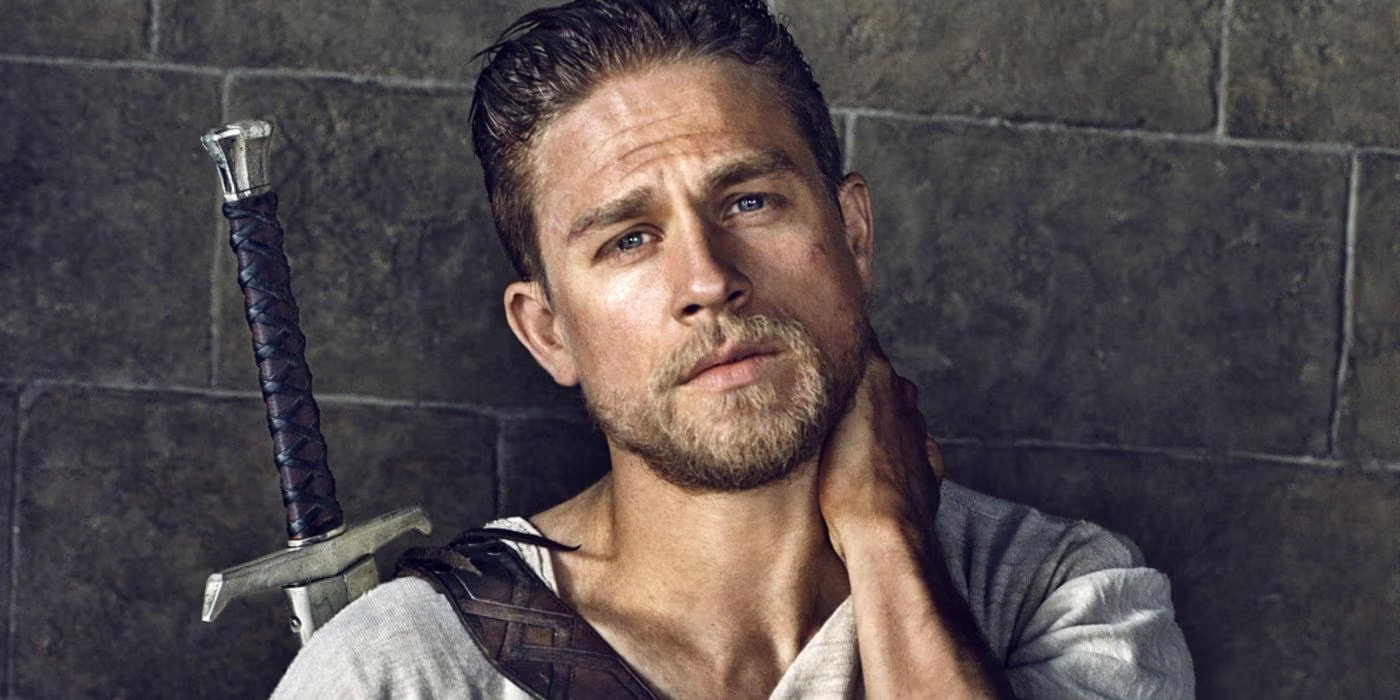

Hollywood is often noisy. Flashy premieres, constant headlines, and overnight sensations dominate the scene. Yet every once in a while, an actor emerges who doesn’t rely on noise but on consistency, depth, and pure screen presence. That’s where Charlie Hunnam stands apart.
At first glance, he doesn’t fit the typical “Hollywood superstar” mold. He isn’t overly exposed in tabloids, and he rarely chases publicity. But over the years, Charlie Hunnam has built something far more valuable than fame—respect.


From gritty television drama to big-budget films, his journey reflects patience, discipline, and an old-school approach to acting. And honestly, that’s what makes him fascinating.
In this article, we’ll explore how Charlie Hunnam evolved into a modern acting icon, the roles that shaped his career, and why his influence in entertainment continues to grow steadily rather than fade.
Charlie Hunnam Bio Table
| Category | Details |
|---|---|
| Full Name | Charles Matthew Hunnam |
| Date of Birth | April 10, 1980 |
| Age | 45 years |
| Profession | Actor, Screenwriter |
| Nationality | British |
| Net Worth (approx.) | $20–25 million |
| Notable Works | Sons of Anarchy, Pacific Rim, King Arthur: Legend of the Sword, The Gentlemen |
Early Life and the First Steps in Acting
Before Charlie Hunnam became a recognizable Hollywood name, he was just a young British actor trying to find his place in a competitive industry. He didn’t grow up with privilege or instant connections. Instead, he built his career step by step, often through small but meaningful roles.
His early work in British television helped him understand the fundamentals of acting. More importantly, it gave him discipline.
Key early influences in his career:
- British TV dramas
- Independent film projects
- Small but emotionally demanding roles
- Early exposure to character-driven storytelling
Even then, Charlie Hunnam showed something rare: patience. While others rushed for fame, he focused on craft.
Breakthrough Moment: Sons of Anarchy
Every actor has a defining moment. For Charlie Hunnam, that moment arrived with Sons of Anarchy.
Playing Jax Teller, a conflicted motorcycle club leader, changed everything. The role was emotionally heavy, morally complex, and deeply layered.
Why this role mattered so much:
- Strong emotional storytelling
- Complex character development
- Themes of loyalty, violence, and identity
- Long-term character evolution across seasons
The performance didn’t just make Charlie Hunnam famous; it made him unforgettable. Fans connected deeply with Jax Teller, and that emotional bond continues even years after the series ended.
In fact, many viewers still associate Charlie Hunnam with that role above all others.
Transition to Hollywood Films
After television success, Charlie Hunnam made a bold move: Hollywood films.
This transition is often difficult for TV actors, but he handled it with surprising ease. Instead of chasing easy roles, he chose projects that challenged him.
Some of his major film appearances include:
- Pacific Rim
- King Arthur: Legend of the Sword
- The Gentlemen
- Crimson Peak
- Papillon
Each film showed a different side of Charlie Hunnam, from action-heavy performances to emotional drama.
Acting Style: What Makes Charlie Hunnam Different
Not every actor can carry both television and film with equal strength. Charlie Hunnam does it naturally.
His acting style is often described as grounded and controlled. He doesn’t overact or rely on dramatic gestures. Instead, he uses subtle expressions and emotional restraint.

Key traits of his acting style:
- Natural dialogue delivery
- Strong emotional control
- Physical commitment to roles
- Deep character immersion
- Authentic on-screen presence
Moreover, Charlie Hunnam brings a sense of realism that feels refreshing in modern cinema.
Charlie Hunnam and Hollywood Evolution
Hollywood has changed dramatically over the last two decades. Streaming platforms, franchise dominance, and digital effects have reshaped storytelling.
Yet Charlie Hunnam remains relevant because he adapts without losing identity.
He doesn’t chase trends blindly. Instead, he chooses roles that align with his strengths. That balance between adaptability and consistency is rare.
Hollywood respects actors who:
- Deliver reliable performances
- Avoid overexposure
- Maintain professional discipline
- Support storytelling over fame
Charlie Hunnam fits this profile perfectly.
Major Career Highlights
| Project | Year | Impact |
|---|---|---|
| Sons of Anarchy | 2008–2014 | Global recognition |
| Pacific Rim | 2013 | Entry into blockbuster cinema |
| Crimson Peak | 2015 | Gothic storytelling experience |
| King Arthur | 2017 | Lead action hero role |
| The Gentlemen | 2019 | Critical appreciation |
These projects helped shape Charlie Hunnam into a versatile actor capable of handling multiple genres.
Career Challenges and Smart Choices
The journey of Charlie Hunnam hasn’t always been smooth. Like many actors, he faced moments of uncertainty, project delays, and industry competition.
However, what stands out is his decision-making. He often chooses quality over quantity. That approach may slow down visibility at times, but it strengthens long-term credibility.
For example:
- He turned down major franchise roles
- He selected complex characters instead of easy commercial wins
- He prioritized creative satisfaction over constant exposure
This is why Charlie Hunnam is respected more than he is overexposed.
Personal Traits That Shape His Success
Outside acting, Charlie Hunnam is known for his grounded personality. He avoids unnecessary media drama and prefers a private lifestyle.
Personality strengths:
- Discipline and focus
- Strong work ethic
- Low media dependency
- Respect for craft
- Calm professional attitude
These qualities influence his performances. When an actor is mentally balanced, it reflects on screen—and that’s exactly what happens with Charlie Hunnam.
Influence on Modern Acting Culture
Many younger actors look up to Charlie Hunnam because he represents a different path to success. Instead of viral fame or social media attention, he shows that steady growth still matters.
His influence includes:
- Encouraging realistic acting styles
- Supporting character-driven storytelling
- Promoting long-term career thinking
- Valuing craft over celebrity culture
In many ways, Charlie Hunnam represents a return to traditional acting values in a modern entertainment world.
Why Charlie Hunnam Remains Relevant Today
In a fast-changing industry, relevance is difficult to maintain. Yet Charlie Hunnam continues to stay important because he evolves without losing identity.
He doesn’t try to reinvent himself drastically. Instead, he refines his strengths.
Reasons for his continued relevance:
- Strong fan loyalty
- Consistent performances
- Selective project choices
- Timeless acting style
- Cross-genre adaptability
Even years after his breakout role, Charlie Hunnam still attracts attention for new projects.
Conclusion
The Rise of a Modern Acting Icon
The story of Charlie Hunnam is not about sudden fame or viral success. It is about steady growth, smart decisions, and dedication to craft.
He built his career slowly, but every step added value. From early British television to Hollywood blockbusters, Charlie Hunnam has shown that authenticity still matters in entertainment.
What makes him a modern acting icon is not just talent, but consistency. He doesn’t chase trends; he builds legacy. And in today’s fast-moving industry, that is rare.
As his career continues, one thing feels clear: Charlie Hunnam is not finished evolving. His best performances may still be ahead, and audiences are ready to follow wherever he goes next.