
The Alhambra night tour attendance revenue has become a significant indicator of cultural tourism performance in Spain’s heritage sector. Night tours of historic landmarks are no longer just an alternative experience; they are a premium tourism product that generates substantial economic value. The Alhambra, in particular, stands out due to its architectural beauty, historical significance, and carefully controlled visitor access during evening hours. This combination creates a high-demand experience that directly influences ticket pricing, visitor capacity, and revenue structures.
Understanding Alhambra night tour attendance revenue requires examining both tourism demand and heritage preservation strategies. Unlike daytime visits, night tours are limited in capacity, which increases exclusivity and allows for higher pricing models. This exclusivity plays a crucial role in revenue optimization while preserving the monument. As global tourism continues to recover and evolve, night tours of iconic sites like the Alhambra represent a growing segment of cultural tourism economics.


Historical Context of Alhambra Night Tours
The evolution of night tours at Alhambra reflects a broader shift in cultural tourism strategy. Initially, the monument primarily operated daytime visits focused on educational and historical exploration. However, rising global tourism demand and preservation concerns led to the introduction of controlled night-time access. This transition was designed to balance visitor experience with conservation efforts, while also unlocking new revenue streams through premium tourism offerings.
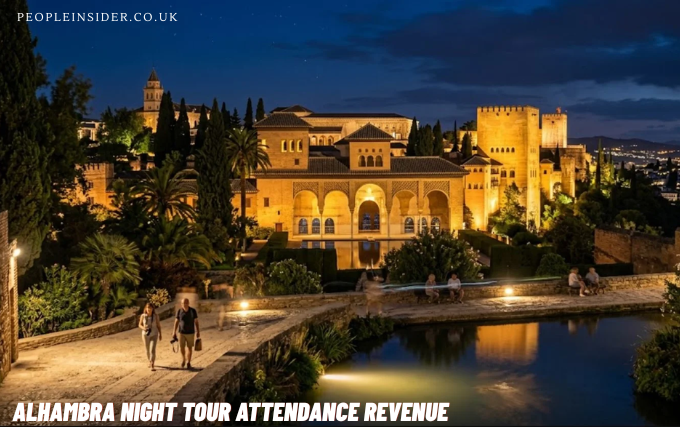
Over time, Alhambra night tour attendance revenue began to grow as the nighttime experience gained popularity among international visitors. The atmosphere of illuminated palaces and quieter surroundings offers a distinct experience compared to daytime crowds. This differentiation has made night tours highly attractive, particularly for travelers seeking exclusive cultural immersion. As a result, night tours have become a vital component of the Alhambra’s overall tourism economy, contributing significantly to annual revenue figures.
Factors Influencing Attendance in Alhambra Night Tours
Several factors directly influence Alhambra night tour attendance revenue, starting with seasonal tourism fluctuations. Peak tourist seasons, especially spring and summer, significantly increase demand for night tours due to favorable weather and higher international arrivals. Additionally, limited ticket availability enhances perceived value, often resulting in rapid sell-outs. This scarcity model plays a crucial role in maximizing both attendance efficiency and revenue generation.
Another key factor is global travel trends and cultural interest. The Alhambra’s reputation as a UNESCO World Heritage Site attracts millions of visitors annually, many of whom prioritize unique nighttime experiences. Marketing campaigns, online booking platforms, and travel influencers also contribute to increased awareness. As a result, Alhambra night tour attendance revenue is heavily influenced by both external tourism flows and internal capacity management strategies, making it a dynamic and responsive economic indicator.
Breakdown of Alhambra Night Tour Attendance Revenue Streams
The structure of Alhambra night tour attendance revenue is built on multiple interconnected income streams. The primary source is ticket sales, which are priced higher for night tours due to their exclusivity and limited capacity. These tickets often include guided experiences, enhancing perceived value and justifying premium pricing. This direct revenue stream forms the backbone of the financial model supporting night operations.
In addition to ticket sales, secondary revenue streams contribute significantly. These include guided tour partnerships, audio guide rentals, and licensed tourism collaborations. Local tourism agencies and travel operators often package night tours with broader Granada travel experiences, further boosting overall revenue. Merchandising and cultural publications also add incremental income. Together, these components ensure that Alhambra night tour attendance revenue extends beyond simple entry fees, forming a diversified and resilient financial ecosystem.
Marketing Strategies Driving Night Tour Revenue Growth
Marketing plays a crucial role in shaping Alhambra night tour attendance revenue, particularly through digital tourism platforms. Online booking systems, social media campaigns, and travel blogs highlight the uniqueness of the night experience, driving global demand. Visual storytelling, especially showcasing illuminated architectural features, has proven highly effective in attracting international tourists. This digital presence significantly enhances booking rates and advance reservations.
Collaborations with travel agencies and cultural institutions also strengthen promotional efforts. By positioning night tours as premium cultural experiences, marketing strategies elevate perceived value and justify higher pricing structures. Seasonal promotions and limited-time availability campaigns further stimulate urgency among travelers. These strategic initiatives collectively ensure steady growth in Alhambra night tour attendance revenue, making marketing a central pillar in the site’s tourism management framework.
Challenges Affecting Attendance and Revenue
Despite strong demand, several challenges impact Alhambra night tour attendance revenue. One of the primary issues is capacity limitation due to strict heritage preservation rules. While these restrictions protect the monument, they also cap potential revenue growth. Managing visitor flow without compromising structural integrity remains a constant balancing act for administrators.
Another challenge is external dependency on global tourism trends. Economic downturns, geopolitical instability, and travel restrictions can significantly reduce international arrivals, directly affecting night tour attendance. Additionally, competition from other cultural attractions in Europe introduces alternative options for travelers. These factors create volatility in Alhambra night tour attendance revenue, requiring adaptive management strategies to maintain financial stability.
Future Outlook of Alhambra Night Tour Attendance Revenue
The future of Alhambra night tour attendance revenue appears promising, driven by increasing demand for experiential and cultural tourism. As travelers seek more immersive experiences, night tours are expected to gain further popularity. Technological enhancements such as augmented reality guides and improved digital booking systems may also enhance visitor engagement and streamline operations.
Sustainability will remain a key focus in shaping future revenue models. Balancing conservation with tourism expansion will likely lead to more refined pricing strategies and controlled capacity increases. Additionally, global tourism recovery trends suggest steady growth in international visits. As a result, Alhambra night tour attendance revenue is expected to remain a strong contributor to Spain’s cultural tourism economy, supported by innovation, preservation, and strategic tourism planning.
Conclusion
The Alhambra night tour attendance revenue reflects the strong connection between cultural heritage tourism and modern economic strategies. Night tours have successfully transformed a historical monument into a high-value tourism product by balancing exclusivity, preservation, and visitor experience. Despite limitations in capacity, the demand continues to grow due to global interest in immersive cultural experiences.